Reimagining Pāḷi Pedagogy: The Natural Method
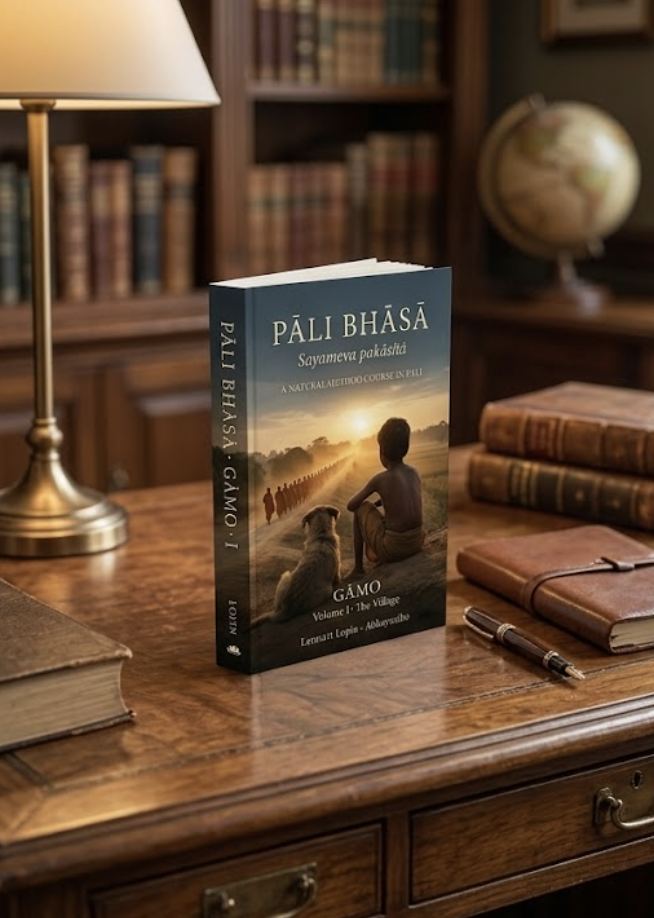
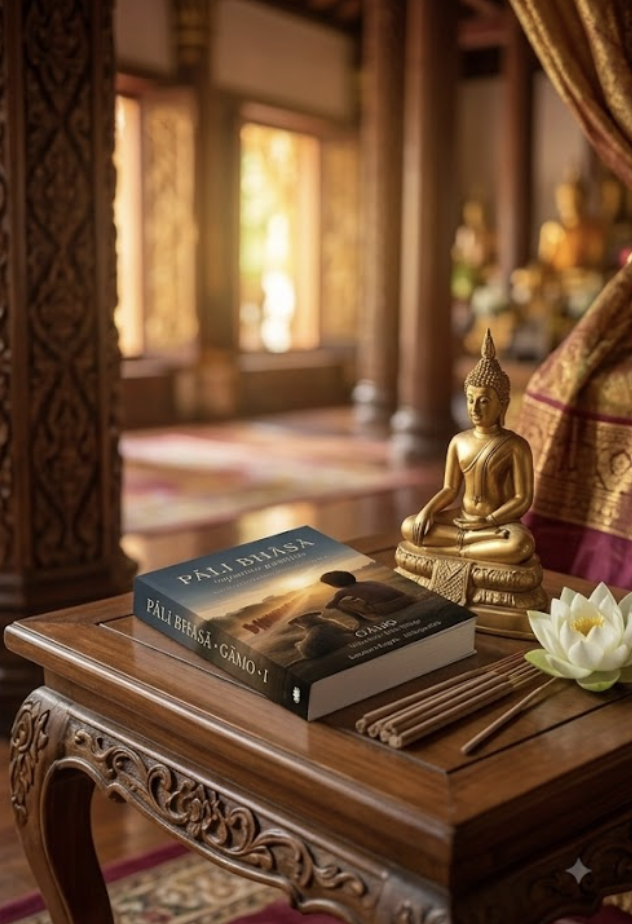
For generations, students of Pāḷi have approached the language of the Theravāda Canon through dense, grammar-translation manuals modeled on 19th-century classical philology. While rigorously analytic, works by scholars like A.K. Warder or Wilhelm Geiger often distance the learner from the living flow of the language, requiring constant mental decoding between Pāḷi paradigms and English equivalents. Pāḷi Bhāsā: Sayameva Pakāsitā marks a departure from this paradigm by adapting Hans Ørberg’s celebrated Lingua Latina per se illustrata method to Pāḷi.
The defining feature of this course is its complete eschewal of translation glosses within the instructional text. From the opening sentence, the student reads pure Pāḷi. Vocabulary and grammatical structures are communicated entirely through contextual juxtaposition, marginal notes, schematic diagrams, and line art. By treating Pāḷi not as a dead puzzle to be dissected but as an intelligible medium of storytelling, the text fosters direct comprehension without intermediate translation.
Narrative Structure and Immersive World-Building
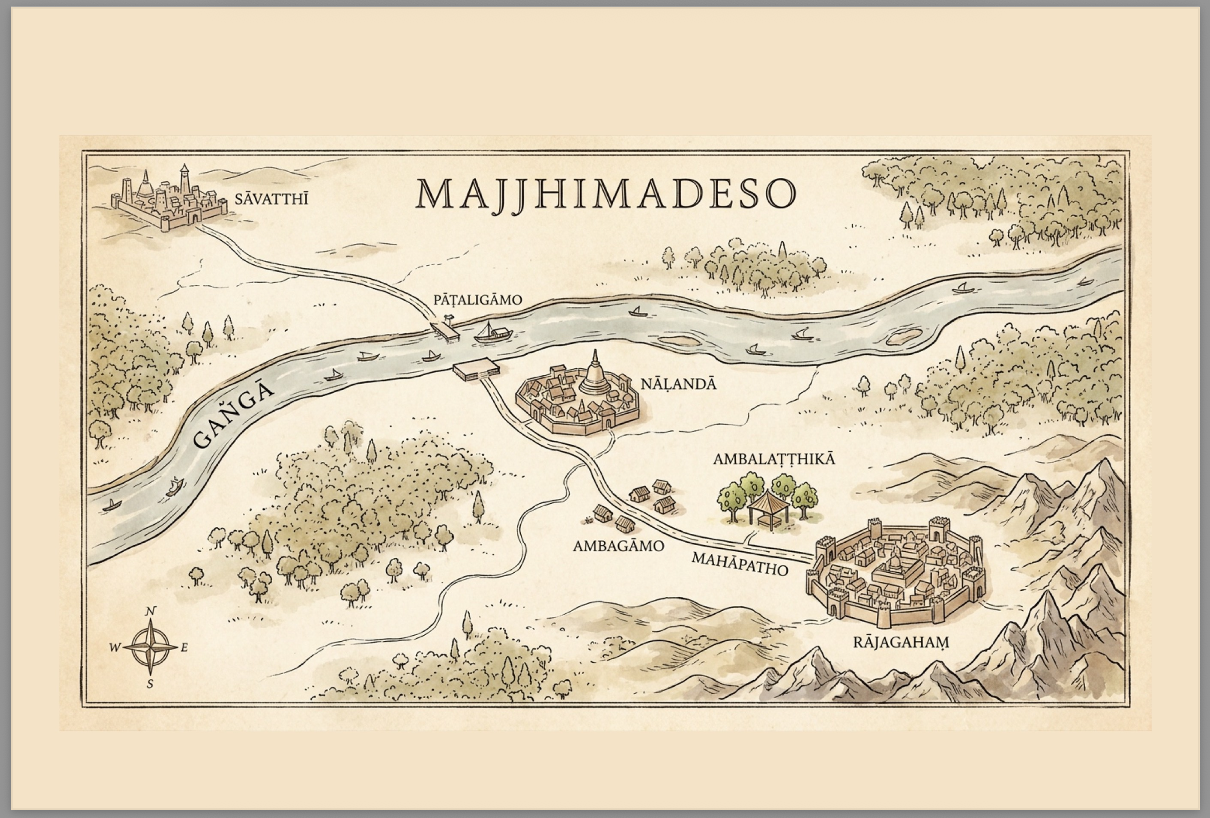
Rather than presenting isolated, contextless sentences, Pāḷi Bhāsā embeds its linguistic progression in a continuous narrative set in ancient Magadha. The story follows a young boy named Nando in the village of Ambagāma, situated along the ancient mahāpatha between Rājagaha and Nāḷandā.
The course moves through carefully calculated increments:
- Geographical & Elementary Foundations (Vaggas 1–4): Establishes nominal declensions, locative usage, and singular/plural contrasts through maps of Jambudīpa, rivers (nadiyo), and kingdoms (janapadā).
- Village Life & Daily Crafts (Vaggas 5–18): Introduces case roles, verbal conjugations, and imperatives through the daily routines of Ambagāma—farming (kasako), pottery (kumbhakāro), blacksmithing (kammāro), weaving (pesakāro), and seasonal rains (vasso).
- Existential Themes & Philosophical Awakening (Vaggas 19–23): As Nando’s world expands to the royal capital of Rājagaha and back, the narrative confronts illness (byādhi) and the death (maraṇa) of his grandmother (ayyakā). This emotional pivot shifts the linguistic need toward understanding impermanence and suffering.
- Encounter with the Buddha (Vaggas 24–28): The narrative culminates as dust rises on the high road and the Buddha enters Ambalaṭṭhikā. Nando, now equipped with roughly 25,000 cumulative words of Pāḷi reading experience, asks the Buddha about the fate of his deceased grandmother. The text transitions seamlessly into authentic sutta-style dialogue using canonical similes (upamāyo), such as the extinguished flame.
Technical Scaffolding and Reference Architecture
The visual layout of Pāḷi Bhāsā is designed to keep the reader moving forward without returning to English dictionary lookups. Each page pairs the main reading text with marginal annotations that visually demonstrate grammatical shifts (e.g., contrasting kasati with kasanti, or gono with gone).
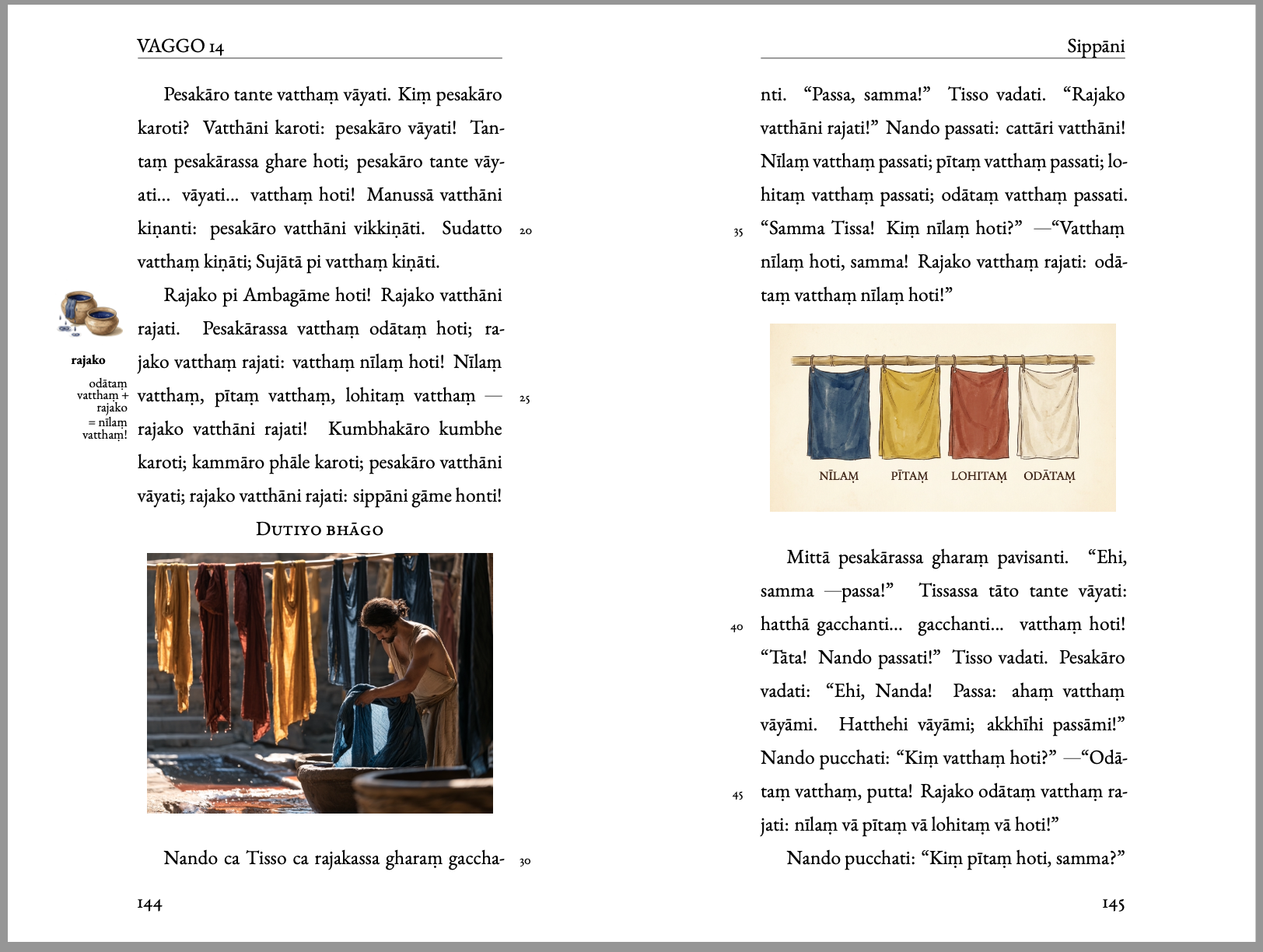
Every chapter concludes with three structured exercises (kammāni):
- Morphological Completion: Fill-in-the-blank sentences targeting specific case endings or verbal inflections.
- Contextual Syntactic Practice: Sentence completion requiring narrative recall and semantic accuracy.
- Pāḷi Reading Comprehension (Pañhā): Questions written entirely in Pāḷi that prompt the reader to form original Pāḷi responses.
For systematic consolidation, the back of the volume contains an extensive Pāḷi-only reference apparatus (Parisiṭṭhāni), including grammatical tables (Rūpamālā), verb tense guides (Kālo), a complete vocabulary index (Padanukkamo), a syntax guide (Byākaraṇānukkamo), and a inventory of canonical similes (Upamāmūlāni).
Impact on Buddhist Studies and Monastic Pedagogy
This work addresses a longstanding challenge in Buddhist education: the gap between introductory grammar memorization and actual fluency in reading the Tipiṭaka. By the final chapter, students are not merely translating Pāḷi; they are thinking and conversing in Pāḷi (Pāḷi-bhāsāya).
Pāḷi Bhāsā serves as an outstanding textbook for university curricula, monastic training centers, and independent Dhamma practitioners. Volume I (Gāmo) lays an intuitive foundation, opening directly into Volume II (Bhagavā), which promises to guide the reader directly into the Sutta Piṭaka. This course represents a major pedagogical advancement in Pāḷi language instruction, restoring a sense of vitality and narrative warmth to the study of the Buddha’s language.